
Why Wastewater Management Is More Important During the Monsoon Season
Why Wastewater Management Is More Important During the Monsoon Season
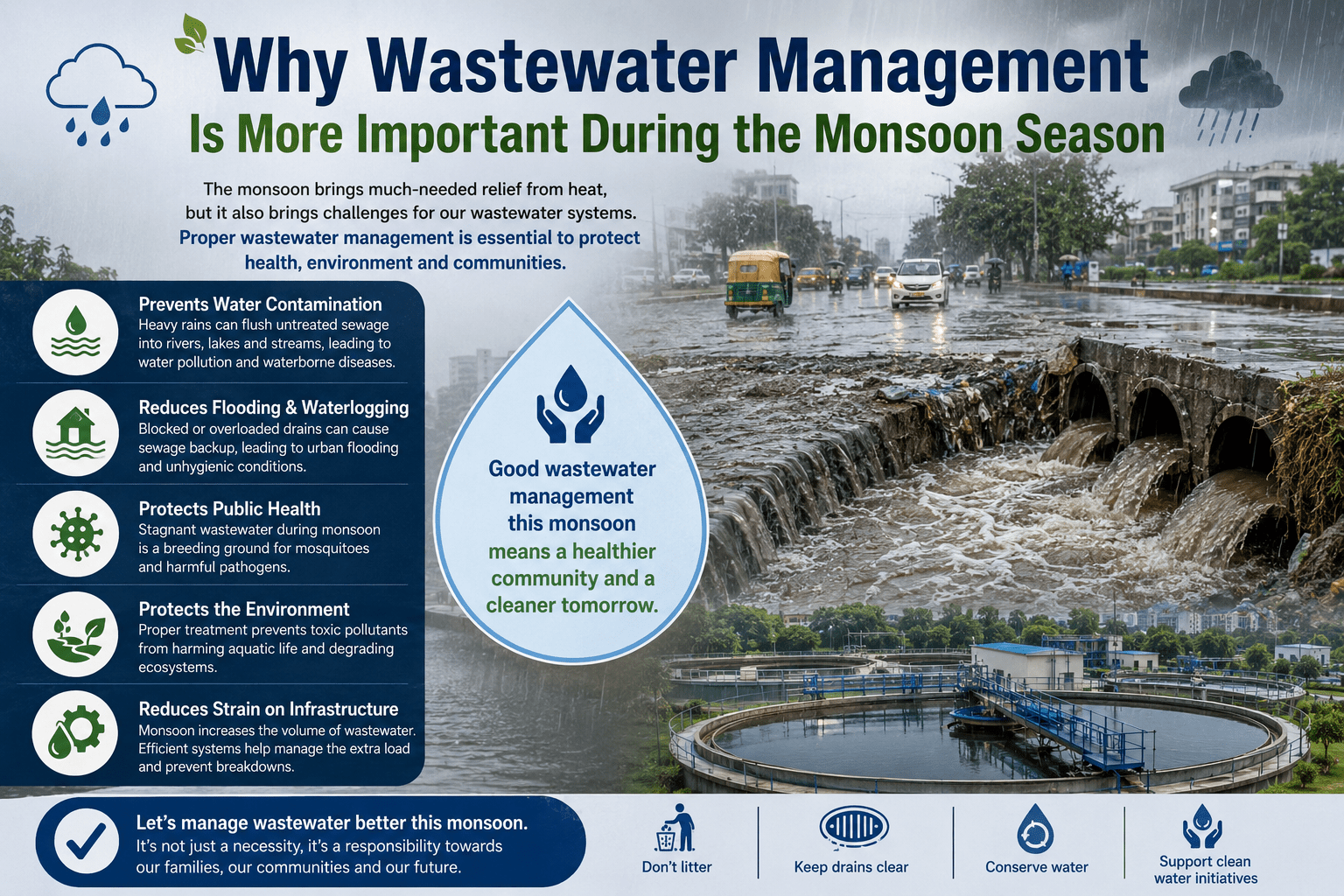
The monsoon season brings much-needed rainfall that replenishes rivers, lakes, and groundwater. It supports agriculture, cools the environment, and provides relief from the summer heat. However, the monsoon also increases the risk of water pollution. Heavy rainfall washes harmful substances into water bodies, making the water unsafe for drinking, farming, and aquatic life. Understanding the causes of water pollution during the monsoon and taking preventive measures can help protect our environment.
Why Does Water Pollution Increase During the Monsoon?
1. Rainwater Runoff
During heavy rainfall, water flows over roads, fields, and open land, carrying dirt, plastic waste, chemicals, oil, and other pollutants into rivers, lakes, and ponds. This process, known as stormwater runoff, is one of the major causes of water pollution during the rainy season.
2. Sewage Overflow
Many cities have drainage systems that cannot handle heavy rainfall. As a result, untreated sewage overflows into nearby water bodies. This sewage contains harmful bacteria, viruses, and other pathogens that contaminate water and increase the risk of waterborne diseases.
3. Agricultural Runoff
Rainwater washes fertilizers, pesticides, and animal waste from farms into nearby rivers and lakes. These pollutants can damage aquatic ecosystems, contaminate drinking water sources, and lead to excessive algae growth.
4. Industrial Wastewater
Industries generate wastewater containing chemicals, heavy metals, oils, and other pollutants. During the monsoon, flooding and excessive rainfall can cause untreated or partially treated wastewater to enter nearby water bodies if proper treatment systems are not in place.
5. Soil Erosion
Heavy rains loosen and wash away topsoil into rivers and lakes. The increased sediment makes the water turbid, reduces oxygen levels, and affects aquatic life.
6. Floodwater Contamination
Floodwaters often mix with waste from landfills, septic tanks, construction sites, and open dumping areas, spreading contaminants across a wide region.
Effects of Water Pollution During the Monsoon
Water pollution during the monsoon has serious environmental and public health consequences. Contaminated water can spread diseases such as cholera, typhoid, dysentery, and hepatitis. It also affects aquatic biodiversity, reduces water quality, harms agriculture, and increases the cost of water treatment for municipalities and industries.
How to Prevent Water Pollution During the Monsoon
Reducing water pollution requires a combination of responsible practices and effective infrastructure. Key preventive measures include:
* Treat sewage before discharging it into natural water bodies.
* Install and maintain efficient wastewater treatment systems in industries.
* Reduce the use of chemical fertilizers and pesticides by adopting sustainable agricultural practices.
* Dispose of solid waste responsibly and prevent littering.
* Clean storm water drains regularly to prevent blockages and sewage overflow.
* Plant trees and maintain green spaces to reduce soil erosion.
* Conduct awareness campaigns and community clean-up initiatives.
* Monitor industrial wastewater discharge to ensure compliance with environmental regulations.
The Company Supports Clients by:
* Designing Effluent Treatment Plants (ETPs) for industrial wastewater.
* Designing Sewage Treatment Plants (STPs) for residential, commercial, and municipal applications.
* Upgrading existing wastewater treatment Plant to improve efficiency and regulatory compliance.
* Offering process optimization to reduce operating costs and improve water recovery.
* Providing technical consultancy, project management, and engineering support throughout the project lifecycle.
* Promoting water reuse and recycling solutions that help conserve freshwater resources and reduce environmental impact.
By implementing reliable wastewater treatment technologies,
Chokhavatia Associates helps organizations minimize pollution, comply with environmental regulations, and contribute to sustainable wastewater management throughout the year.
Conclusion
The monsoon season is essential for replenishing water resources, but it also increases the risk of water pollution through runoff, sewage overflow, industrial discharge, and soil erosion. Preventing pollution requires responsible waste management, efficient wastewater treatment, sustainable farming practices, and public awareness. With the right engineering solutions and environmental expertise, organizations can significantly reduce wastewater pollution and protect valuable water resources for future generations.